Can a Water Leak Sensor Detect a Slow Leak Find Out
A water leak sensor can detect a slow leak, but only when the sensor type and placement match the leak location. Spot sensors guard one point, while cable sensors and flow monitors offer wider or whole-home coverage.
Can a water leak sensor detect a slow leak? Yes, but the answer depends on the sensor type and where you place it. This guide explains how each type works, where to put them, and when a flow monitor may be the better choice.
The Short Answer: Yes, but Placement and Sensor Type Determine Success
Can a water leak sensor detect a slow leak? Yes, when the sensor sits close to the leak and uses the right detection method. A standard spot sensor only reacts to water that reaches its probes. A cable sensor covers a longer path. A flow monitor watches your plumbing for unusual usage.
Each type has limits. Knowing those limits helps you choose the right protection for your home. The most important question is not just whether the sensor can detect a slow leak. It is whether the sensor sits in the right place to reach that leak before damage grows.
What Counts as a Slow Leak and Why It’s So Easy to Miss

A slow leak is a small, steady water loss that happens over hours, days, or weeks. It can come from a dripping supply line, a loose fitting, or a worn seal. The water may evaporate before you notice it. It may also travel under flooring or behind cabinets.
A slow leak may release only a few drops per minute. Over a month, those drops add up. The water can soak into drywall, wood, or carpet. It can also create conditions for mold. By the time you see damage, the leak has often been active for a long time. Slow leaks are easy to miss because they do not create a puddle right away. They may only show up as a damp spot, a musty smell, or a higher water bill.
How Water Leak Sensors Work: Spot Sensors, Cable Sensors, and Flow Monitors
Water leak sensors detect moisture in different ways. The best choice depends on your home, your budget, and the type of leak you want to catch.
Spot Sensors: Detect Water at a Single Point
Spot sensors are small devices with two metal probes. When water bridges the probes, the sensor triggers an alert. They are simple and affordable. But they only detect water at that exact point. If a leak happens several feet away, the sensor stays silent.
Cable and Rope Sensors: Detect Moisture Along a Longer Path
Cable sensors use two wires running the length of a flexible cable. When moisture touches the cable at any point, it completes a circuit. You can lay the cable along baseboards, behind toilets, or under appliances. This gives you wider coverage than a spot sensor.
Flow Monitors: Detect Usage Patterns Rather Than Standing Water
Flow monitors attach to your main water line or an appliance supply line. They measure water flow and look for patterns. A steady drip creates a small, continuous flow that a flow monitor may flag as a slow leak. These devices are better at finding hidden leaks inside walls or under floors.
| Sensor type | Best suited to | Power and network | Coverage | Main limitation |
|---|---|---|---|---|
| Spot sensor | Single point near sinks, toilets, and appliances | Battery or plug-in; Wi-Fi or hub | Only the probe area | Misses leaks away from the sensor |
| Cable sensor | Long runs along baseboards or under appliances | Plug-in; connects to a base unit | Full cable length | Needs a clear path to the leak area |
| Flow monitor | Hidden leaks inside walls or under floors | Battery or plug-in; Wi-Fi | Whole home or one supply line | Cannot pinpoint the exact leak location |
Why Slow Leaks Often Slip Past a Standard Spot Sensor
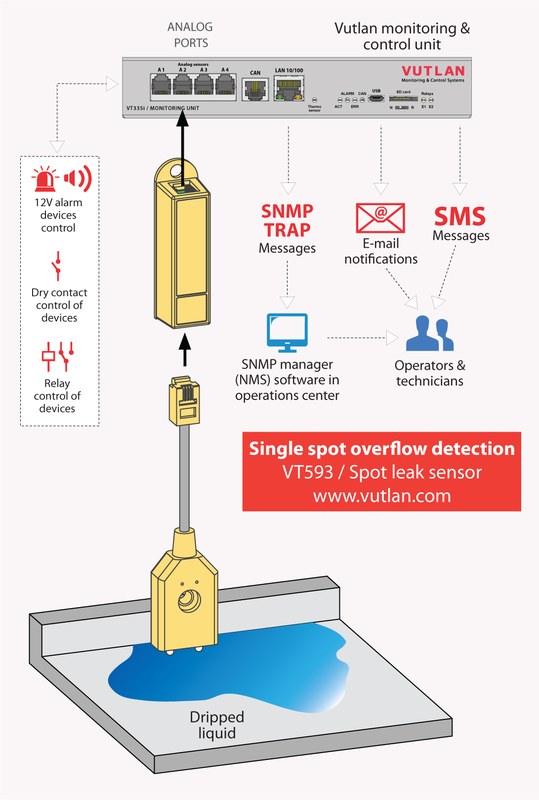
A standard spot sensor has one job: detect water at its location. It cannot sense moisture in a wall, under a floor, or behind a cabinet. Many slow leaks start in places you cannot see.
A dripping pipe inside a wall may never touch the sensor. The water may also pool on a lower level, away from the sensor. Many homeowners assume one sensor protects the whole house. That is not how spot sensors work. They guard a small area. If you want broader protection, you need more sensors or a different technology. Cable sensors and flow monitors close some of those gaps.
Where to Place Leak Sensors to Catch a Slow Leak in Your Home
Placement is the most important step. A sensor that sits too far from the leak will not help. Start with the areas where water is most likely to appear. Our guide on where to place water leak sensors covers each room in more detail.
High-Risk Areas: Under Sinks, Behind Toilets, and Near Water Heaters
Put a spot sensor under every sink, especially in bathrooms and kitchens. Place one behind each toilet where the supply line connects. Water heaters are another key spot. Put a sensor on the floor near the tank and near the pressure relief valve. These areas see the most leaks.
Appliance Zones: Dishwashers, Washing Machines, and Refrigerators
Dishwashers and washing machines have supply lines and drain hoses that can fail. Place a sensor on the floor in front of or beside the appliance. Refrigerators with ice makers and water dispensers also need attention. Put a sensor under the fridge or in the drip pan area.
Basements, Crawlspaces, and Utility Rooms
Basements often hide water heaters, sump pumps, and main water lines. Place sensors near these fixtures. Crawlspaces are harder to reach, but cable sensors can run along the foundation. Utility rooms with washing machines and sinks should have sensors too.
Renter-Friendly Placement vs. Permanent Homeowner Installation
Renters should choose sensors that do not require drilling or permanent mounting. Many spot sensors sit on the floor or stick with adhesive. Cable sensors can run along baseboards without damage. Homeowners may add hardwired sensors or install a flow monitor on the main supply line. Check your lease before making any permanent changes.
Flow Monitors: The Stronger Defense Against Hidden or Persistent Slow Leaks
For hidden leaks, flow monitors are the stronger option. They do not need to touch the water. They watch the flow and flag patterns that suggest a problem. Before choosing one, it helps to compare a water leak sensor vs water shutoff valve to understand which adds the most protection.
How Flow Monitors Detect a Steady Drip Over Time
A flow monitor measures how much water moves through the pipe. It learns your home’s normal usage. A small, constant flow at 2 a.m. may indicate a leak. Some models send an alert when flow continues for too long. Others compare daily usage and flag a sudden increase.
Sensitivity Limits, False Alarms, and Whole-Home vs. Point-of-Use
Flow monitors are not perfect. Very small drips may fall below the monitor’s sensitivity. A slow leak that only happens when the system is off may be missed. False alarms can occur with unusual water use, like filling a pool or watering plants.
Whole-home monitors cover all plumbing but cannot tell you the exact leak location. Point-of-use monitors attach to a single appliance and offer more detail for that zone.
Installation, Power, and Connectivity Considerations Before You Buy
Before you buy, check power, network, and alert requirements. These details affect how well the sensor works in your home.
Battery-Powered vs. Hardwired Sensors
Battery-powered sensors are easy to place anywhere. They need regular battery changes. Hardwired sensors use a power outlet and never need charging. They require a nearby outlet and may need a longer cable. Choose based on the location and your willingness to maintain batteries.
Wi-Fi, Hubs, and Local Storage Requirements
Most smart leak sensors connect over Wi-Fi. Some use a hub or bridge. Check whether your Wi-Fi band is supported. A sensor that loses Wi-Fi may still sound a local alarm, but it may not send a phone alert. Some systems store event history locally or in the cloud. Know where your data goes.
Alerts, Subscriptions, and Professional Monitoring Options
Basic sensors send an app alert or sound a siren. Some systems offer professional monitoring, where a monitoring center calls you after a leak. Professional monitoring may require a subscription and a contract. Check the terms before you buy. Many leak sensors work fine without a plan.
Privacy and Cybersecurity for Connected Leak Sensors
A connected leak sensor knows when you use water. That data can reveal when you are home or away. Use a unique password and enable two-factor authentication. Update the firmware regularly. Review which apps and users can access the device. If the vendor offers local storage, consider using it.
Maintenance, Ownership Costs, and Your Next Steps
Leak sensors need light maintenance to stay reliable. Battery life varies by model. Some last months; others last years. Check the manufacturer’s guidance. Test each sensor monthly by pressing the test button or touching a damp cloth to the probes. Replace batteries before they run out. Update firmware when prompted. Over time, sensors may lose sensitivity. Replace them if they stop responding to test alerts.
Battery Life, Firmware Updates, and Sensor Lifespan
Most spot sensors use coin or AA batteries. Battery life depends on how often the sensor checks in. Firmware updates fix bugs and improve detection. Set a reminder to check for updates. A sensor that fails its test should be replaced.
Building a Slow-Leak Detection Plan for Your Home
Start with spot sensors in the highest-risk areas. Add cable sensors where you need wider coverage. If you want whole-home protection, consider a flow monitor. Test everything after setup and once a month after that. Keep a record of battery changes and firmware updates. For model-specific help, see our roundup of the best water leak sensors for smart homes.
Can a water leak sensor detect a slow leak? Yes, when it is the right type and placed in the right spot. Spot sensors catch water at a single point. Cable sensors cover a longer path. Flow monitors find hidden leaks by watching water usage. Start with the highest-risk areas, test your sensors monthly, and add a flow monitor if you want stronger whole-home protection.
Frequently Asked Questions
Yes, when the sensor sits close to the leak point. Place the sensor on the floor under the sink where water would pool, and test it monthly to confirm it still works.
Some sensors sound a local alarm without Wi-Fi, but phone alerts require a working connection. Check the product manual to see how the sensor behaves during an internet or power outage.
Many do not. Basic app alerts are usually free. Professional monitoring, cloud storage, or extended history may require a paid plan. Verify the current terms for the exact model before you buy.
Place sensors under sinks, behind toilets, near water heaters, and beside dishwashers, washing machines, and refrigerators. Basements and utility rooms with main water lines also need coverage.
Test each sensor once a month. Use the test button or touch the probes with a damp cloth. Replace batteries and update firmware when the manufacturer recommends it.
Yes. A flow monitor watches water usage patterns and can flag a steady drip that continues for too long. Very small drips may fall below its sensitivity, so check the model’s specifications.