8 Best Blink Outdoor 4 and Mini 2 Cameras: Buying Guide
Outdoor security cameras help us monitor entrances, yards, and other areas around a home. Wireless models can send motion alerts, record activity, and let us check a live view from a phone without running video cables through the house. The Blink Outdoor 4 and Blink Mini 2 offer these core features in different designs: the Outdoor 4 runs on batteries and is built for outdoor use, while the Mini 2 plugs into an outlet and suits covered indoor or outdoor spaces.
The right choice depends mainly on where we plan to place the camera, whether we have a nearby power outlet, and which features we need for recording, motion detection, night vision, and two-way audio. We also need to consider subscription costs, local storage options, weather resistance, and the limits of battery-powered recording. We compared the Blink Outdoor 4 and Mini 2 to determine which camera fits different home security needs.
8 Best Blink Outdoor 4 and Mini 2 Cameras
We reviewed the best Blink Outdoor 4 and Mini 2 options to help us compare their features, video quality, and setup. Our list highlights key differences so we can choose the right camera for our needs.
Blink Mini 2K+ Two-Camera Set
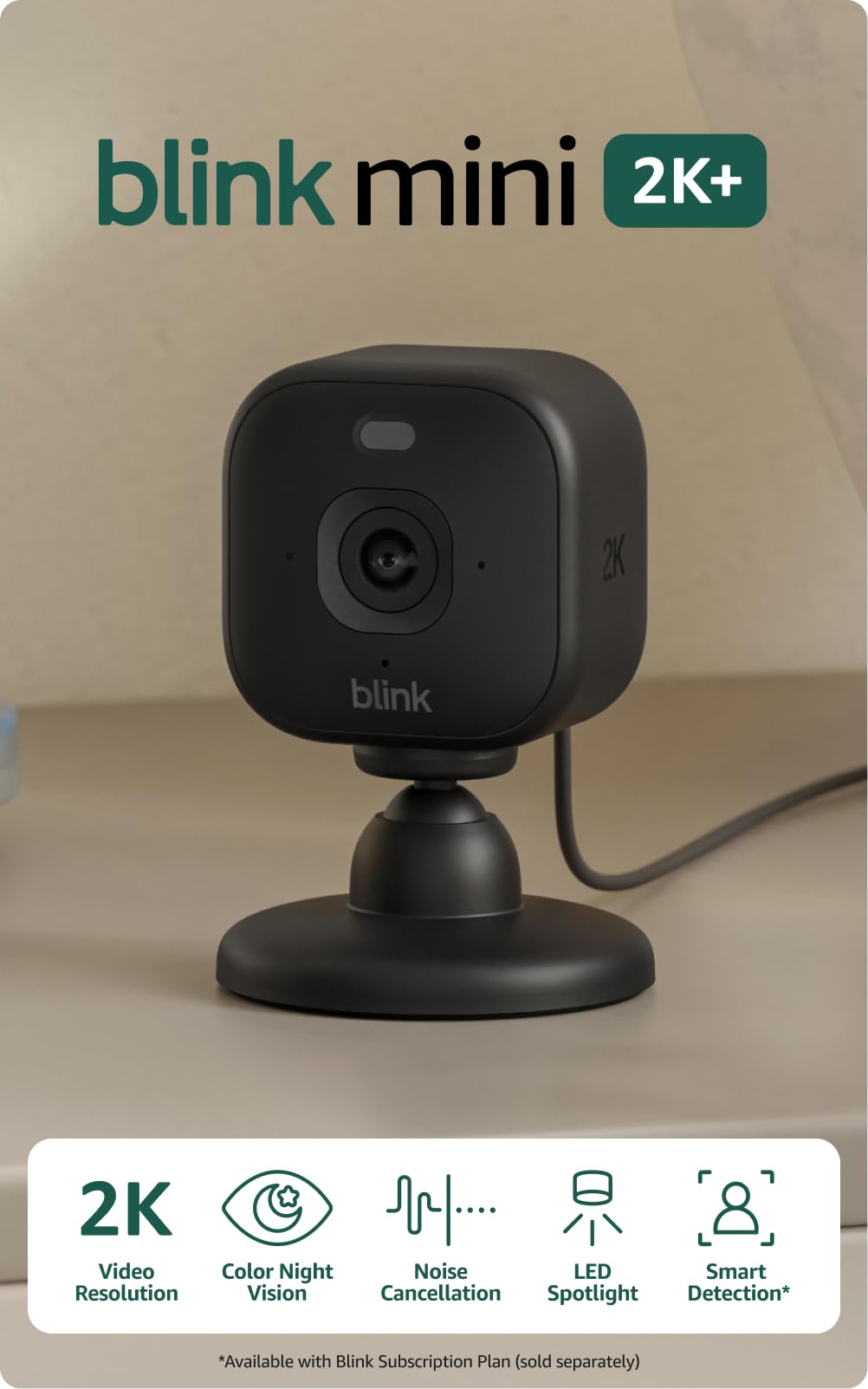
We recommend this set for simple indoor monitoring, especially when we want sharp video, broad coverage, and easy plug-in setup.
Pros
- Clear 2K video with a wide view
- Quick setup and flexible mounting
- Improved two-way audio with noise cancellation
Cons
- Cloud recording requires a paid plan after the trial
- Indoor power adapters limit placement
- Some useful detection tools require a subscription
After connecting the cameras to the Blink app, we found the setup simple and manageable. The included stands and mounting kits made it easy to place one camera in a main room and another near a pet area or entryway.
The 2K image showed more detail than basic 1080p cameras. We could check faces, packages, and movement across a wide part of the room. Digital zoom helped us inspect clips, although zoomed footage looked less clear than the original view.
Motion alerts worked well after we adjusted the activity zones and sensitivity. Person and vehicle detection adds better filtering, but Blink requires a separate subscription for those features. The free trial helps us test them before deciding whether the ongoing cost fits our needs.
Two-way talk sounded clearer than older compact cameras we have used. Noise cancellation made short conversations easier, though it still worked best in a reasonably quiet room. Night vision also helped us monitor dark spaces without leaving a light on.
These cameras plug into indoor outlets, so we did not need to recharge batteries. That convenience also limits placement, and outdoor use requires the separately sold weather-resistant power adapter. Blink also offers cloud storage through its subscription plan; without a plan, we need another supported way to save important clips.
Blink Mini 2K+
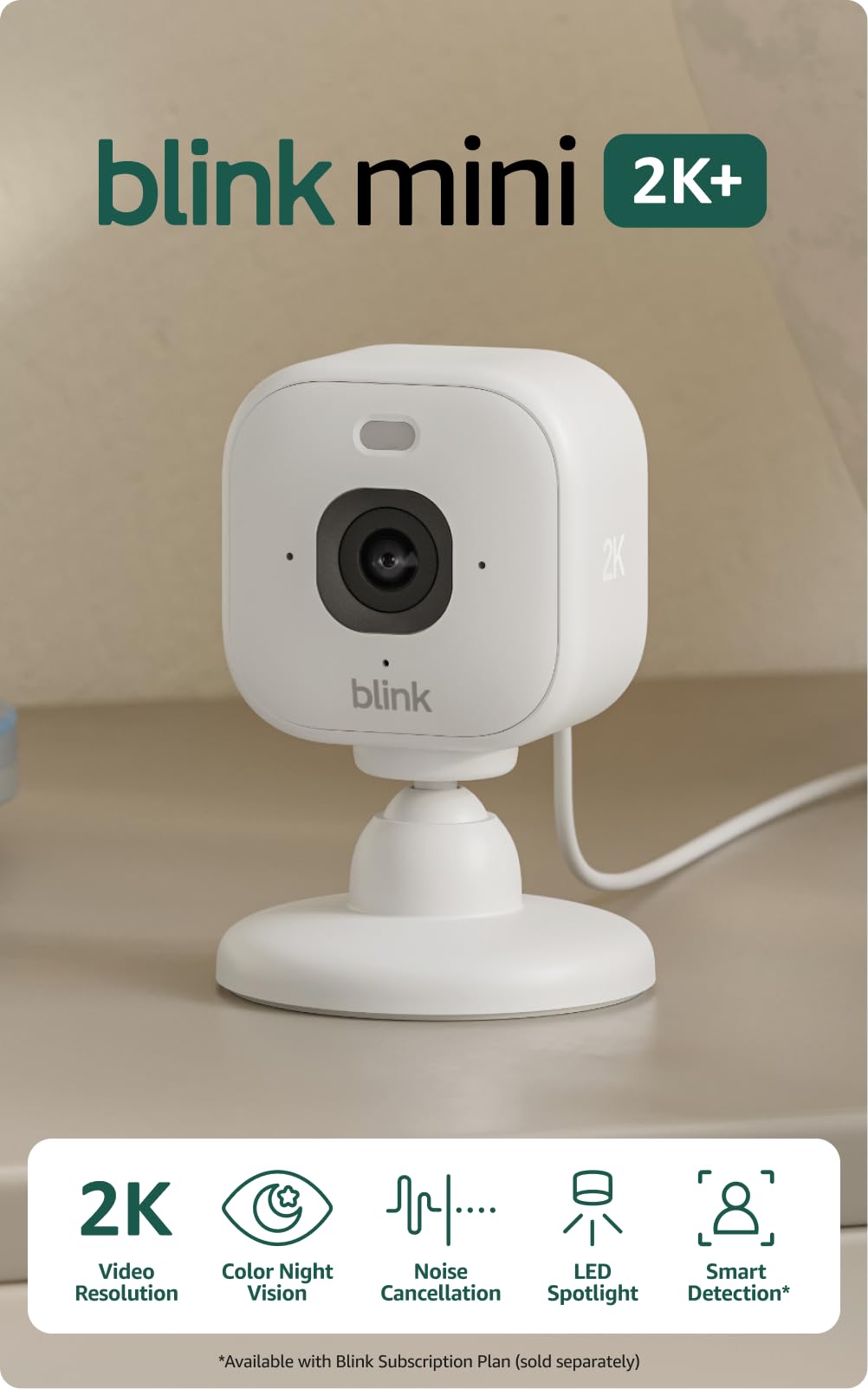
We recommend this two-camera kit for clear indoor monitoring, easy setup, and flexible placement near outlets.
Pros
- Sharp 2K video with a wide view
- Clearer two-way audio with noise reduction
- Simple setup and useful motion controls
Cons
- Cloud storage requires a paid plan after the trial
- Indoor power adapters limit placement
- Smart person and vehicle alerts require a subscription
We set up the cameras through the Blink app and found the process quick and manageable. The compact design worked well on a shelf, while the included mounts gave us more options for walls and corners.
Video looked sharp during the day, and the wide view helped us watch larger rooms without moving the camera. Night vision also gave us a useful view in low light. Motion alerts were easy to adjust, which helped reduce unwanted notifications.
The two-way talk feature made it easy for us to speak with people or check on pets. Audio sounded clearer than expected, although background noise can still affect conversations.
The main drawback is the storage model. Blink includes a free trial, but keeping clips in the cloud requires a Blink Subscription Plan. Without one, we need to download important recordings or use another supported storage option. The cameras also need nearby power outlets, so they work best indoors unless we buy the separate weather-resistant adapter.
Blink Outdoor 4

We recommend the Blink Outdoor 4 for simple outdoor monitoring, especially when we want wireless setup and long battery life without running power cables.
Pros
- Clear 1080p video with useful infrared night vision
- Fast setup and flexible mounting
- Long battery life with moderate activity
Cons
- Sync Module required for this add-on camera
- Cloud storage needs a paid plan after the trial
- Wi-Fi range can affect connection quality
We found the camera easy to mount and connect through the Blink app. The live view looks clear enough for checking entrances, driveways, and walkways, while two-way audio lets us speak with people near the camera.
Motion alerts worked well during regular testing, and the wider view helped cover more of an outdoor area. Person detection can make alerts more useful, but it requires a paid Blink subscription.
The included lithium batteries should last a long time with moderate use, though frequent live views and motion recordings can reduce that span. We also need a Sync Module for this add-on model, which adds cost and another device to manage.
Overall, the Blink Outdoor 4 fits buyers who want a straightforward outdoor camera with good basic video and minimal wiring. Connection strength remains the main concern, so we would place it where the camera receives a reliable Wi-Fi signal.
Blink Outdoor 4 + Mini 2K+
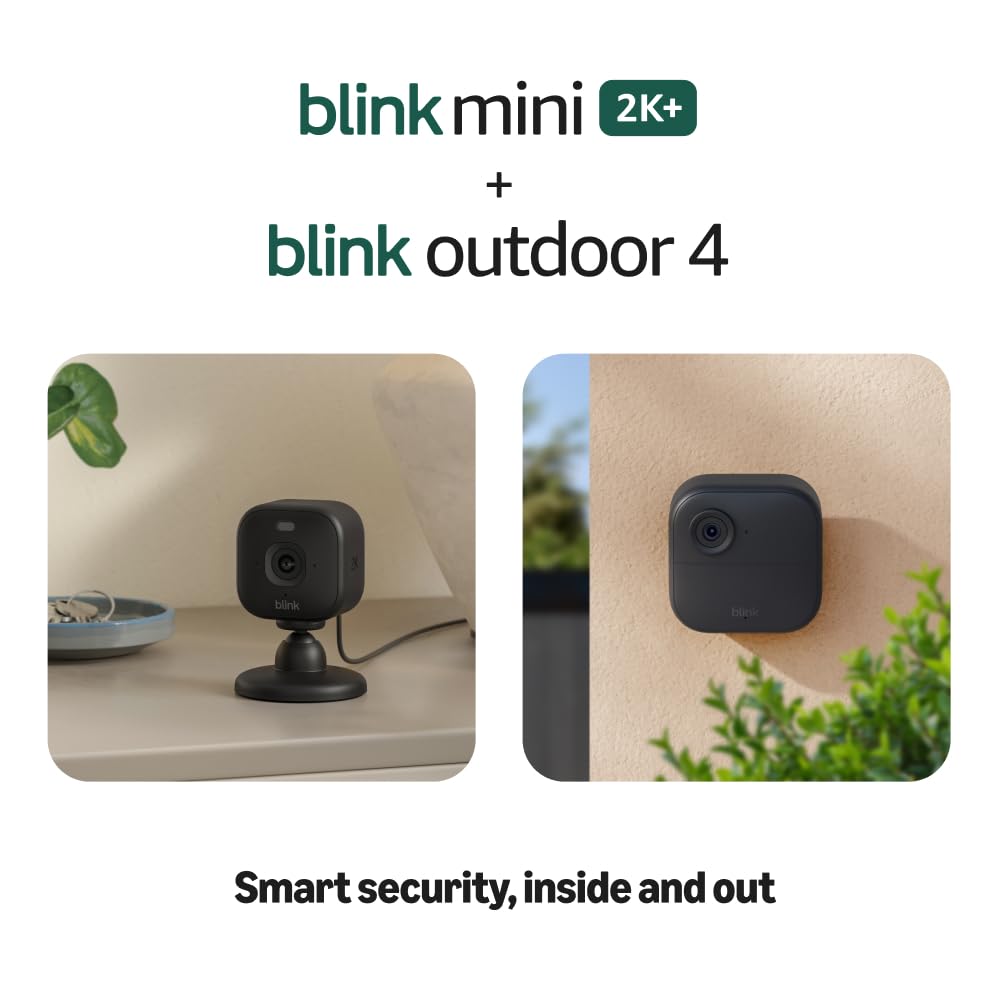
We recommend this bundle for shoppers who want simple outdoor and indoor monitoring, but setup and storage limits may cause problems.
Pros
- We can place the weather-resistant Outdoor 4 almost anywhere without running power cables.
- The Mini 2K+ gives us a sharper view of rooms, pets, and entry areas.
- Alexa support makes viewing cameras and changing system settings convenient.
Cons
- We need a subscription or extra hardware to save clips reliably.
- Some buyers report Wi-Fi setup problems and unreliable camera connections.
- The bundle has received mixed feedback about image quality and customer support.
The Outdoor 4 worked well for watching outdoor areas without frequent battery changes. Its wireless design made placement easier, while the included Sync Module helped connect the cameras through the Blink app.
Indoors, the Mini 2K+ provided a clearer view than the Outdoor 4. We found it useful for checking pets, hallways, or a front entry, but it needs a nearby power outlet and a stable Wi-Fi connection.
Storage requires careful planning. The included Sync Module Core does not provide local recording, so we would need a Blink subscription or separately purchased storage equipment to keep video clips. Person and vehicle alerts also require a paid plan.
Because the rating is low and reviews mention setup and support issues, we would choose this bundle only if we already use Alexa and have reliable Wi-Fi. Buyers who want simple local storage or a more dependable setup should consider other options.
Blink Outdoor 4

We recommend the Blink Outdoor 4 for affordable, wire-free coverage across several outdoor areas, especially when long battery life matters.
Pros
- Easy wireless setup with included batteries and mounts
- Clear 1080p video, night vision, and two-way audio
- Fast motion alerts and wide viewing area
Cons
- Cloud recording requires a paid subscription after the trial
- Sync Module Core does not include local storage
- Wi-Fi strength can affect connection reliability
We found the cameras quick to install and simple to manage in the Blink app. The battery design worked well for places without a nearby outlet, such as a driveway, side gate, or shed. The included Sync Module Core helped connect the three cameras to one system.
Daytime video looked clear enough to identify activity near the camera. Infrared night vision also gave us a useful view in low light, while two-way audio worked for short conversations. Motion detection responded quickly, though busy areas may create extra alerts.
The system’s main limitation involves storage. Sync Module Core does not provide local recording, so we would need a Blink subscription to keep cloud clips after the trial period. We could also add a compatible Sync Module and storage device, but that increases the total cost.
Connectivity deserves attention during setup. Cameras close to the router or Sync Module performed more consistently, while weaker Wi-Fi areas may produce delays or missed connections. Overall, we would choose the Outdoor 4 when we need several battery-powered cameras and want a straightforward system that works with Alexa.
Blink Outdoor 4
We recommend Blink Outdoor 4 for simple outdoor monitoring because it offers clear video, easy setup, and long battery life without a power cable.
Pros
- Wireless design makes placement easy.
- Video looks clear in daylight and at night.
- Motion alerts arrive quickly.
Cons
- Cloud recording requires a paid plan after the trial.
- The included Sync Module Core has no local storage.
- Battery life depends on activity and settings.
We mounted the cameras without much trouble and connected them through the Blink app. The included batteries and mounting hardware help get the system running quickly, while the two-camera setup covers common areas such as a driveway and back door.
The 1080p video gives us a useful view of people and movement, and infrared night vision works well in low light. Two-way audio lets us speak through the app, although we would not rely on it for detailed conversations in noisy areas.
Motion detection responds promptly, and activity zones help reduce alerts from unwanted areas. Person detection can improve notifications, but it requires a separate Blink subscription.
The main drawback involves storage. Sync Module Core does not include local recording, so we must use cloud storage through a subscription after the free trial. We also found the base less convenient to assemble than the cameras themselves. For shoppers who want affordable wireless cameras and accept subscription costs, Outdoor 4 remains a practical choice.
Blink Outdoor 4
We recommend the Blink Outdoor 4 for buyers who want a simple wireless camera with clear video, useful motion alerts, and long battery life.
Pros
- Easy wireless setup and flexible mounting
- Clear 1080p video with infrared night vision
- Long battery life under moderate use
Cons
- Cloud storage requires a paid plan after the trial
- Sync Module Core does not include local storage
- Wi-Fi range may vary between homes
We found the Outdoor 4 quick to install, with no power cable to route through walls or windows. The included batteries and Sync Module Core made setup straightforward, though the camera still depends on a stable 2.4 GHz Wi-Fi connection.
Daytime video looked clear enough for checking entrances, driveways, and walkways. Night vision helped us identify movement in dark areas, while two-way audio worked well for short conversations. Motion detection responded quickly, although busy areas may produce extra alerts.
Battery life is a major benefit for locations without a nearby outlet. Actual results will depend on motion levels, settings, weather, and how often we use live view.
The main drawback involves storage. The Sync Module Core does not provide local storage, so keeping clips beyond the 30-day trial requires a Blink subscription. We also found that weak Wi-Fi can affect responsiveness, especially when the camera sits far from the router.
Blink Weather Resistant 13ft Power Adapter
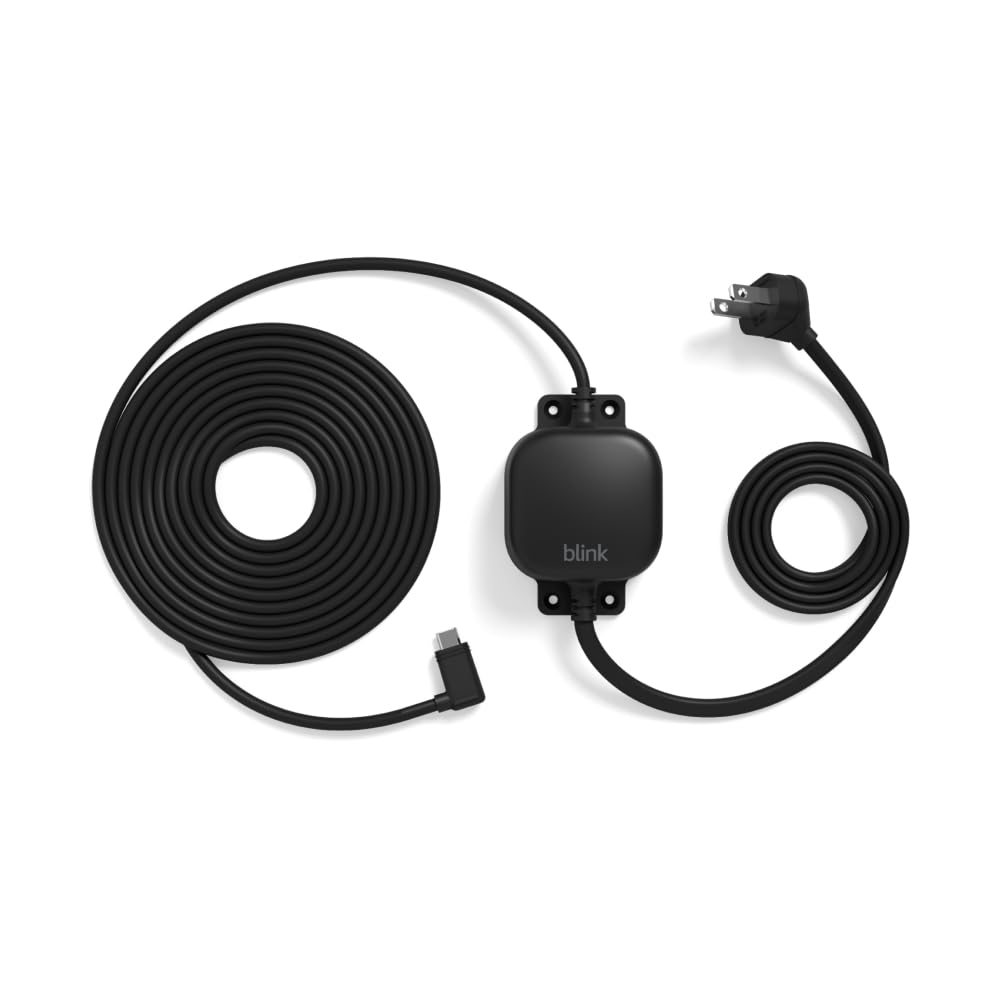
We recommend this adapter for keeping compatible Blink cameras powered outdoors without regular battery changes.
Pros
- 13-foot cable supports flexible camera placement.
- Weather-resistant design suits outdoor use.
- Works with Blink Mini 2, Mini 2K+, Outdoor 4, and Outdoor 2K+.
Cons
- Requires a nearby standard outlet.
- The cable may be too short for some installations.
- The angled connector can limit cable positioning.
We found the long cable useful when placing a camera near a soffit, driveway, or walkway. It gave us more freedom than a short indoor cable, though some locations may still need an extension cord.
The adapter worked well for continuous power, which removed the need to check and replace camera batteries. Its weather-resistant build also made us more comfortable using it outside, but we still kept the outlet and connection protected from direct water.
Installation stayed simple because the adapter uses a standard outlet and a USB-C connection for compatible Blink devices. We would check the camera location and outlet distance first, since the 13-foot length will not suit every home.
Buying Guide
We should start by matching the camera to our monitoring needs. Outdoor models suit areas such as gardens, driveways, and entrances, while compact indoor models work better for rooms, hallways, and smaller spaces.
| Feature | What we should check |
|---|---|
| Placement | Confirm whether the camera is designed for indoor or outdoor use. |
| Power | Compare battery operation with wired power and consider access to outlets. |
| Video quality | Look for the resolution and viewing angle that fit our space. |
| Night vision | Check how clearly the camera records in low light. |
| Motion detection | Consider detection range, alerts, and activity zones. |
| Storage | Review cloud plans, local storage, fees, and recording limits. |
| Connectivity | Confirm Wi-Fi compatibility and signal strength at the planned location. |
We should also check the camera’s size, mounting options, and setup process. A small camera may fit discreetly on a shelf, while an outdoor unit may need secure mounting and protection from weather.
Privacy and account security deserve attention. We should review app permissions, user access controls, two-factor authentication, and the company’s data policies before buying.
Editor’s picks
We recommend the Blink Outdoor 4 for larger outdoor areas and homes that need longer battery life. Its weather-resistant design, wider field of view, and improved image quality make it a stronger choice for monitoring entrances, driveways, and yards.
We prefer the Blink Mini 2 for indoor use and smaller spaces. Its compact design, color night view with a compatible subscription, and optional weather resistance make it useful for rooms, covered porches, and small entryways.
| Best for | Our pick | Why we chose it |
|---|---|---|
| Outdoor security | Blink Outdoor 4 | Weather resistance, long battery life, and a wider view |
| Indoor monitoring | Blink Mini 2 | Small size, simple setup, and flexible placement |
| Lower running costs | Blink Outdoor 4 | Uses replaceable batteries instead of constant power |
| Continuous power | Blink Mini 2 | Designed for wired operation |
We would choose the Outdoor 4 when placement flexibility matters. We would choose the Mini 2 when a nearby outlet is available and we want a small, affordable camera for a specific room or covered area.
Frequently asked questions
What is the main difference between Blink Outdoor 4 and Mini 2?
We use the Outdoor 4 for wireless, weather-resistant monitoring. The Mini 2 needs continuous power and works best indoors or under a covered outdoor area.
Do both cameras record in 1080p HD?
Yes. Both cameras support 1080p HD video and two-way audio. The Mini 2 also supports color night view when we provide enough lighting.
Do we need a subscription?
We can use live view and motion alerts without a subscription. Cloud video storage and some advanced features require a Blink subscription plan. A Sync Module 2 with a USB drive can provide local storage for compatible cameras.
How long does the Outdoor 4 battery last?
Blink rates its battery life at up to two years under typical settings. Actual life depends on motion activity, temperature, video quality, and how often we use live view.
Can we use both cameras in one system?
Yes. We can add the Outdoor 4 and Mini 2 to the same Blink account and manage them through the Blink app.
Which camera should we choose?
We should choose the Outdoor 4 for flexible placement and battery power. The Mini 2 suits locations near an outlet where we want a smaller, plug-in camera.
Conclusion
We see the Blink Outdoor 4 as the better choice for outdoor coverage. It offers weather resistance, longer battery life, and features designed for monitoring larger areas.
The Blink Mini 2 works well for indoor spaces and sheltered areas. Its compact design, lower cost, and simple setup make it useful for rooms, entryways, and small covered spaces.
| Best for | Recommended camera |
|---|---|
| Outdoor monitoring | Blink Outdoor 4 |
| Indoor monitoring | Blink Mini 2 |
| Flexible placement | Blink Outdoor 4 |
| Lower purchase cost | Blink Mini 2 |
We should choose based on placement and power needs. The Outdoor 4 suits users who want wireless outdoor coverage, while the Mini 2 fits users who have a nearby outlet and mainly need indoor monitoring.