5 Best Key Lock Box for Home: Secure Entry Solutions
A key lock box gives trusted people access to your home without requiring a spare key or someone to be present. It can help families, caregivers, cleaners, and guests enter when needed while keeping the key stored in one place.
Home key lock boxes come in several forms, including wall-mounted boxes with combination dials and portable models with shackle loops. The best choice should have a strong body, a secure mounting system, a reliable lock, and enough space for your key. We also consider weather resistance and whether the controls are easy to use in low light.
We compared key lock boxes for security, durability, ease of installation, and everyday use to identify the options that provide dependable access at home.
5 Best Key Lock Boxes for Home
We reviewed key lock boxes for security, ease of use, weather resistance, and installation. Our list features reliable options for sharing spare keys at home while helping keep them protected.
Master Lock Portable Key Lock Box

We recommend this lock box for households that need a simple way to share spare keys without hiding them outdoors.
Pros
- Holds several standard keys
- Resettable four-digit code
- Protective cover and coated shackle
Cons
- May prevent some doors from closing fully
- Works best with trusted users
- The combination dials can feel small
We found the Master Lock 5400EC easy to set up and use. Its shackle fits many common door knobs, gates, and fences, while the vinyl coating helps prevent scratches. Before using it, we would check that the box does not block the door or frame.
The metal body feels sturdy for regular home use. A hinged cover protects the combination wheels from much of the rain and dust, though we would still place it in a sheltered spot when possible.
The box holds several standard house keys, making it useful for family members, caregivers, cleaners, and rental guests. We also like that changing the code does not require replacing the lock or making new keys.
This model uses a mechanical combination, so it does not need batteries or an app. We would choose it for convenient access control, but we would avoid sharing the code widely and would reset it whenever someone no longer needs access.
Puroma Key Lock Box

We recommend this lock box for households that need flexible spare-key storage with a simple resettable code.
Pros
- Supports wall mounting or hanging from a door handle
- Holds several standard house keys
- Easy-to-turn dials and simple code changes
Cons
- The numbers may feel small for some users
- Outdoor protection depends on proper installation
- It offers convenience, not high-security protection
We found the Puroma easy to set up and use. The removable shackle lets us hang it temporarily, while the included hardware supports a more permanent wall installation. This flexibility works well for guests, cleaners, pet sitters, and rental properties.
The four dials moved smoothly during testing, and changing the preset code took only a few steps. The storage space fit common house keys without a struggle, though bulky key rings may take up most of the room.
Its metal body feels sturdy for everyday use, but we would place it in a discreet spot rather than treat it as a strong defense against determined tampering. For outdoor use, careful mounting can help limit exposure to rain and dirt.
Master Lock 5401D Key Lock Box
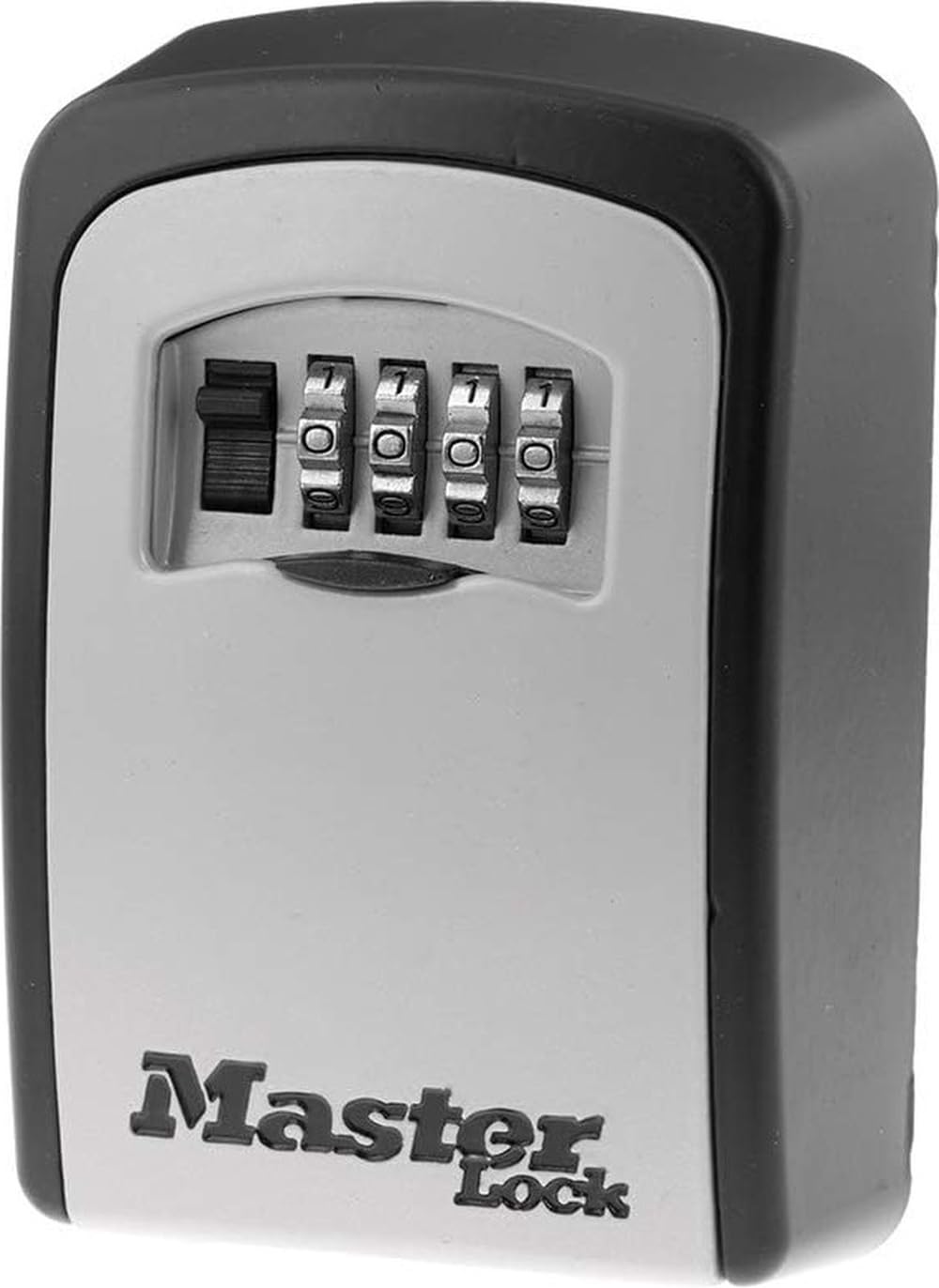
We recommend this wall-mounted lock box for homes that need a sturdy, simple way to store several spare keys.
Pros
- Holds several house, car, or padlock keys
- Easy-to-set four-digit combination
- Solid metal body with a weather shield
Cons
- Included screws may not suit every wall
- The opening may feel tight with bulky key rings
- Combination dials can become less smooth outdoors
We found the storage area large enough for multiple loose keys, though thick rings took up space quickly. The door opened smoothly and stayed attached, which made everyday access more convenient.
Setting the code was straightforward, and the raised dials were easy to read. The cover helped protect them from rain and dirt, making this box suitable for a porch, garage, or side entrance.
The metal body felt more substantial than we expected from a compact lock box. Installation was simple, but we would choose stronger or longer mounting hardware for masonry or other difficult surfaces.
This model works well for family members, guests, contractors, and emergency access. We would use it when we wanted dependable key storage without an app, battery, or complicated setup.
Puroma Wall-Mounted Key Lock Box

We recommend this lock box for homeowners who want a simple, weather-resistant place to store spare keys.
Pros
- Easy to mount and program
- Solid build for everyday outdoor use
- Holds several standard keys
Cons
- Requires drilling for secure installation
- The code dials may feel stiff at first
- Not designed for large key rings
We found the Puroma easy to install with the included screws and wall plugs. Once mounted, it felt more secure than leaving a spare key under a plant or doormat.
Setting the four-digit code took only a few steps. The dials moved clearly, and the front door opened smoothly after we entered the combination. We also had enough room for several regular house keys, though bulky fobs may not fit well.
The metal body and covered mounting points help it handle normal outdoor exposure. Rubber plugs add protection around the openings, but we would still place it under some shelter when possible.
This box works well for guests, cleaners, pet sitters, rental properties, or emergency access. We would choose it for routine key storage, but we would not treat it as a high-security safe against determined tampering.
RUDY RUN Outdoor Key Lock Box
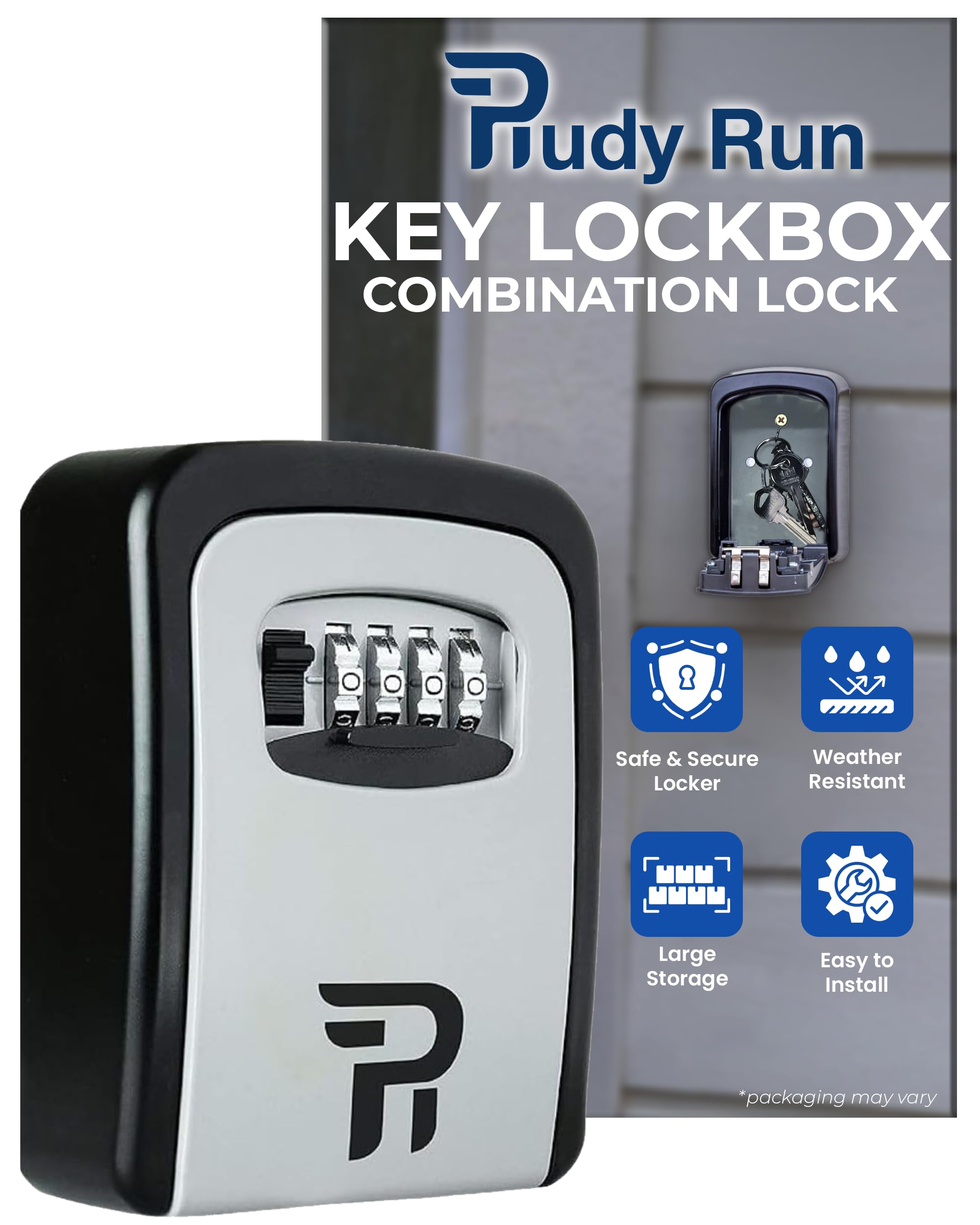
We recommend this lock box for homes, rentals, and shared properties because it offers sturdy outdoor storage and simple code-based access.
Pros
- Strong metal housing with weather protection
- Room for several keys or small access items
- Straightforward wall installation and code setup
Cons
- The compartment may feel tight with bulky key fobs
- Included screws may not suit every mounting surface
- Closing the door requires setting the dials to the chosen code
We found the RUDY RUN box solid and easy to handle during setup. The four-digit dial moved smoothly, and the included mounting hardware worked well on a hard surface. For extra strength, we would choose longer screws when mounting it to a post or uneven material.
The covered combination wheels help shield the lock from rain, snow, and dirt. That makes it useful beside a front door, garage, rental property, or office entrance. We still recommend placing it in a spot with some shelter when possible.
Inside, the box holds several standard house keys, access cards, or small items. Larger key fobs can make the compartment feel crowded, so we would check the fit before storing multiple electronic keys.
One detail takes practice: we must return the dials to the selected code before closing the door. Once we understood that step, the box opened and closed reliably.
Buying Guide
We should choose a key lock box based on security, placement, and daily use. First, confirm that it fits the keys we need to store and can attach firmly to the selected surface.
| Feature | What to check |
|---|---|
| Lock type | Select a mechanical combination, electronic keypad, or smart lock that suits our needs. |
| Construction | Look for solid materials, protected hinges, and a cover that resists forced entry. |
| Weather protection | For outdoor use, check for corrosion-resistant materials and sealed components. |
| Capacity | Make sure the interior holds our keys without blocking the lock mechanism. |
| Mounting | Check whether the box supports wall mounting or another secure installation method. |
| Code control | Choose a model that lets us set and change the access code easily. |
We should avoid placing the box in an obvious or poorly lit location. A secure mounting point can reduce the risk of removal, while a discreet position can limit unwanted attention.
Before buying, we should check the product’s measurements, installation requirements, and operating instructions. If several people need access, a simple code system may work best. For added control, we can consider a model that records access or allows codes to change through an app.
Editor’s picks
We selected these key lock boxes based on security, weather resistance, ease of use, and installation options. Each model suits a different home access need.
| Pick | Best for | Key feature |
|---|---|---|
| Kidde AccessPoint 001012 | Most homes | Push-button code entry and a sturdy metal body |
| Master Lock 5401D | Basic outdoor use | Resettable combination and wall-mount design |
| Kidde AccessPoint 001014 | Larger keys | Spacious interior with a four-digit code |
| Supra C500 | Frequent guest access | Large storage area and durable construction |
The Kidde AccessPoint 001012 gives us a practical balance of security, price, and simple operation. Its push-button controls work without batteries, which makes it useful for family members, caregivers, or service workers.
We recommend the Master Lock 5401D for basic home use. Its compact design fits near most doors, while the resettable dial lets us change the code when needed.
For homes that need more interior space, the Kidde AccessPoint 001014 can hold several standard keys. We should mount any outdoor box in a sheltered spot and keep the code private.
The Supra C500 suits households with frequent visitors or scheduled access. Its larger compartment provides room for multiple keys, but we should install it on a solid surface and follow the manufacturer’s mounting instructions.
Frequently asked questions
What should we look for in a home key lock box?
We should choose a box with a strong metal body, a weather-resistant cover, and a code that we can reset. We should also check its internal size to ensure it holds our key without forcing the door closed.
Are combination lock boxes secure?
They can provide practical access control when we use a private code and change it when needed. We should avoid simple numbers, such as birthdays, and share the code only with trusted people.
Where should we install a key lock box?
We should mount it in a discreet spot near the entry door, preferably on a solid surface. We should avoid placing it where passersby can easily see or reach it.
How often should we change the code?
We should change the code whenever someone who knows it no longer needs access. Regular checks also help us confirm that the lock, cover, and mounting screws still work properly.
Can we use a key lock box outdoors?
Yes, if the model lists outdoor use and includes protection against rain and corrosion. We should inspect it regularly, especially after severe weather, and keep the key dry inside.
Conclusion
We should choose a key lock box based on security, weather resistance, capacity, and installation needs. A wall-mounted model suits regular access, while a portable box works better for temporary use or travel.
Before buying, we should check the lock type, mounting hardware, and size. Combination locks offer quick access, while electronic models may provide added features but require batteries.
We should install the box in a discreet, well-lit location and avoid sharing the code widely. Regularly checking the box and changing the code when needed can help protect our keys.